




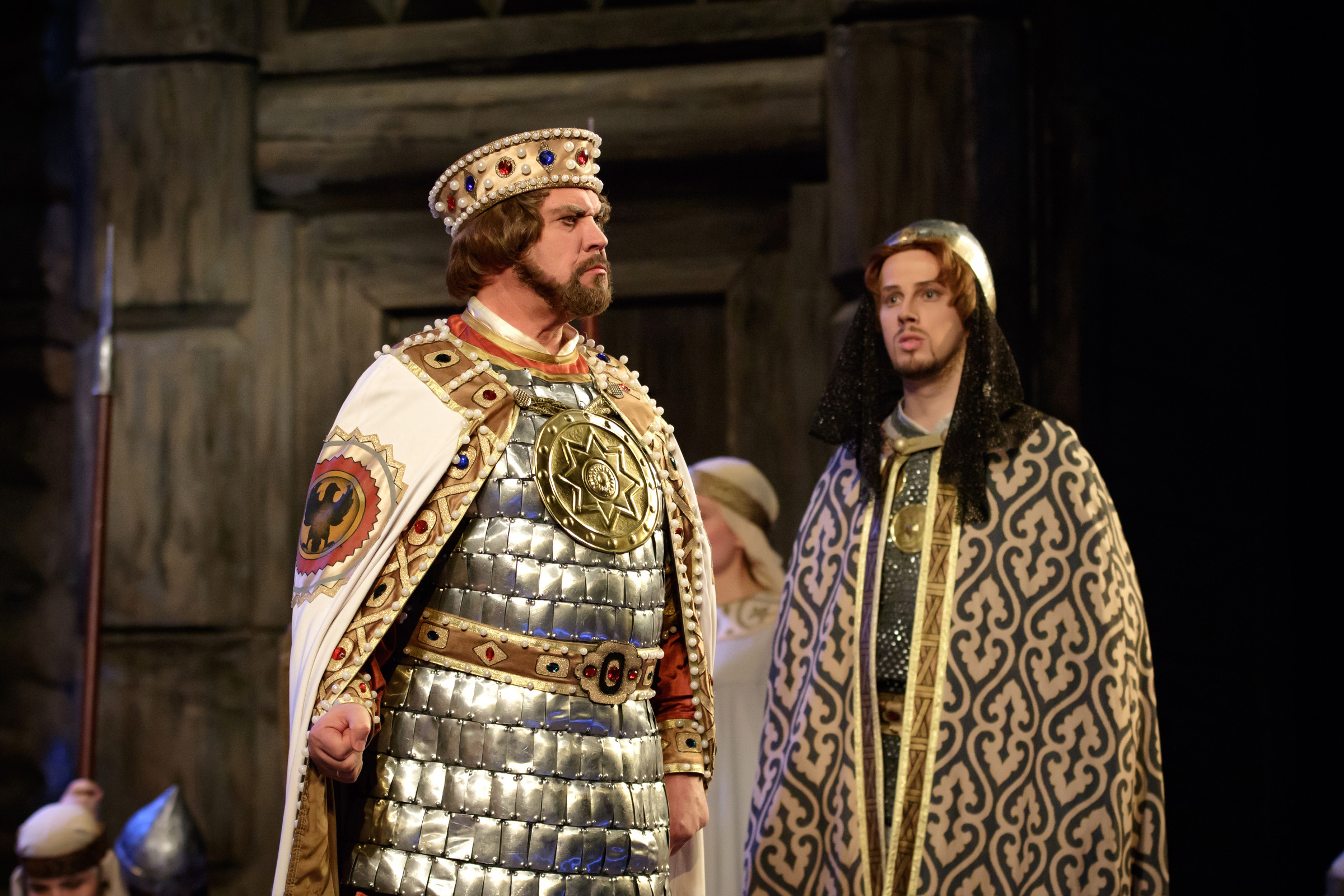
Everyone, who has never heard about Prince Igor, has at least heard the choir Fly Away on the Wings of the Wind or the aria Oh Give, Give Me Liberty. The opera based on The Tale of Igor's Campaign has gained a great popularity since the premiere in 1890. It is one of the most significant operas in Russian culture – and, like the original source, it leaves many riddles and questions.
Aleksandr Borodin has been writing Prince Igor for 18 years, devoting the lion's share of time for teaching and scientific studies in chemistry – and did not have time to finish the opera. It was prepared for execution by Nikolai Rimsky-Korsakov and Aleksandr Glazunov, in accordance to the author's drafts. Their edition was established on the stage, but there is still no definite answer: Does this version correspond to the author's conception? In what order should the opera scenes be performed?
Aleksandr Lazarev, the conductor, insisted that the Yekaterinburg performance must ended with the scene of Polovtsian Dances. The famous maestro sees this as the following logic of action and Borodin's logic: the famous dance scene ceases to be just a colorful afterpiece, becoming a dramatic culmination of the spectacle – a frightening demonstration of the Polovtsi strength before the Russian prince who just married the khan's daughter and realized which trap he fell into. Lazarev's co-authors, directors from Petersburg, created the performance, following the tradition of "great style" – with elaborate mass mise-en-scenes, classical figurative scenery and detailed historical dresses.


